

Owl Explorers is a nature-based mentoring program for older children who are ready for longer days on the land, deeper engagement, and a more integrated learning experience.
This program is designed for children who benefit from immersion rather than segmentation, who thrive when given time to follow curiosity, and who are ready to take on meaningful responsibility within a supportive community.
Research in child development, neuroscience, and environmental health consistently shows that extended time in natural settings supports emotional regulation, focus, physical health, and social development. Author and researcher Richard Louv describes this as a remedy to “nature-deficit,” noting strong links between outdoor play and reduced anxiety, improved attention, and greater resilience.
Owl Explorers offers a spacious, relational container where learning unfolds through direct experience, skilled mentorship, and connection to place.
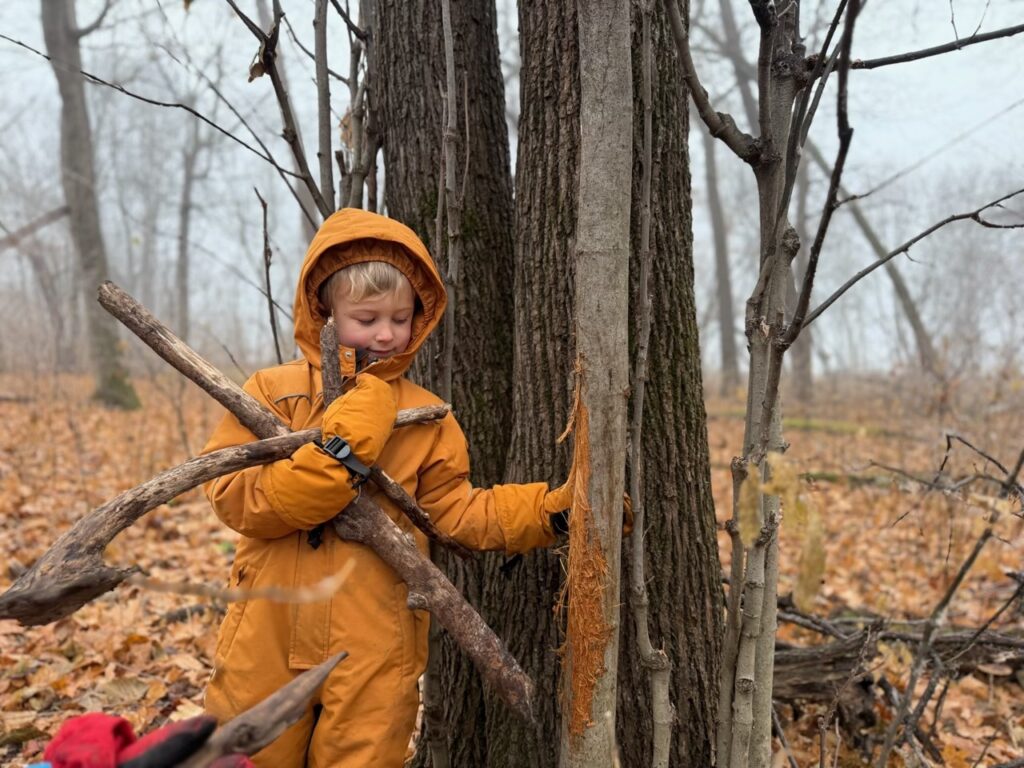
Owl Explorers provides extended time outdoors where skills, play, creativity, and reflection are woven together naturally. Rather than moving through a fixed schedule of activities, children experience a full, living day on the land.
This structure supports what many health and education studies now affirm: children learn best when stress is low, movement is frequent, and curiosity leads the way. Time in green spaces has been shown to support nervous system regulation, reduce cortisol levels, and improve mood and immune function.
Children engage in a wide range of experiences, including:
Wildlife tracking and animal awareness
Bird language and close observation of the landscape
Fire tending, shelter building, and practical outdoor skills
Foraging, food preparation, and seasonal harvesting
Nature-based games, movement, and physical challenges
Handcrafts, building, and creative projects
Storytelling, reflection, and shared conversation
These experiences arise in response to the season, the weather, the group, and the moment, allowing learning to feel alive and relevant rather than rushed or compartmentalized.
Owl Explorers is guided by a mentoring approach rooted in relationship, curiosity, and trust.
Modern neuroscience shows that children learn most effectively through relationship and imitation, a process supported by mirror neurons, which activate when we observe others’ actions, emotions, and problem-solving strategies. In practice, this means children are constantly learning from the presence, tone, and behavior of the adults around them.
In Owl Explorers, mentors model:
Calm presence and emotional regulation
Respectful communication and cooperation
Attentive observation and patience
Skillful engagement with tools, land, and others
Rather than directing every outcome, mentors create conditions for learning by offering meaningful challenges, asking thoughtful questions, and allowing interests to deepen over time. This supports confidence, intrinsic motivation, and a strong sense of belonging.
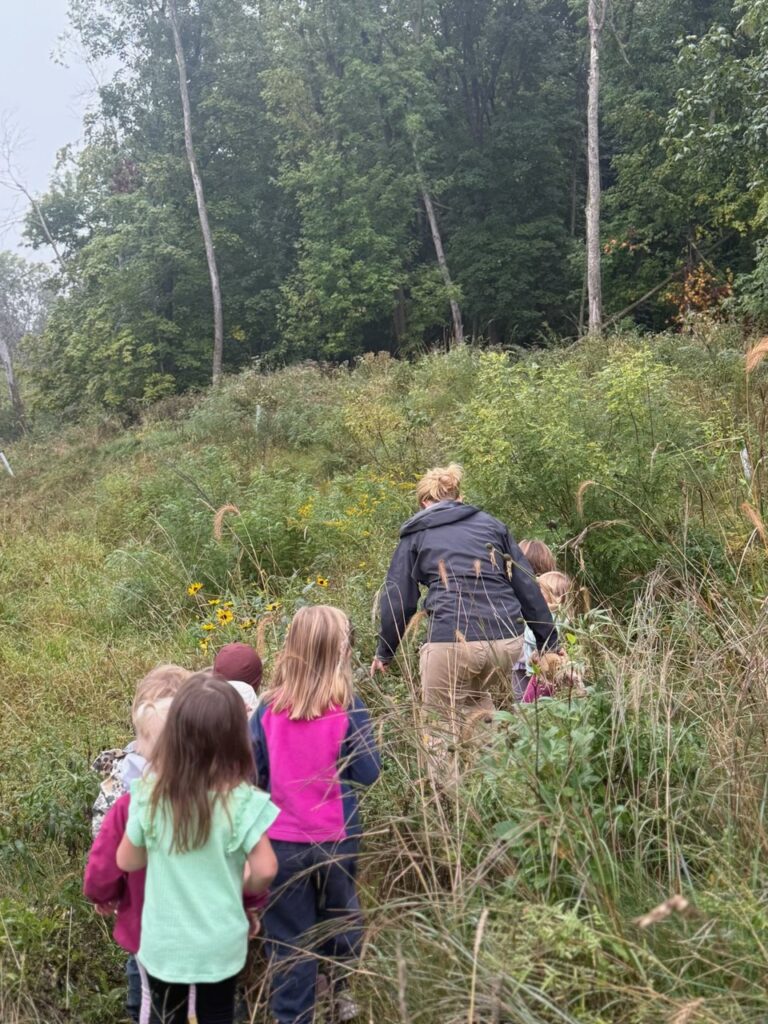
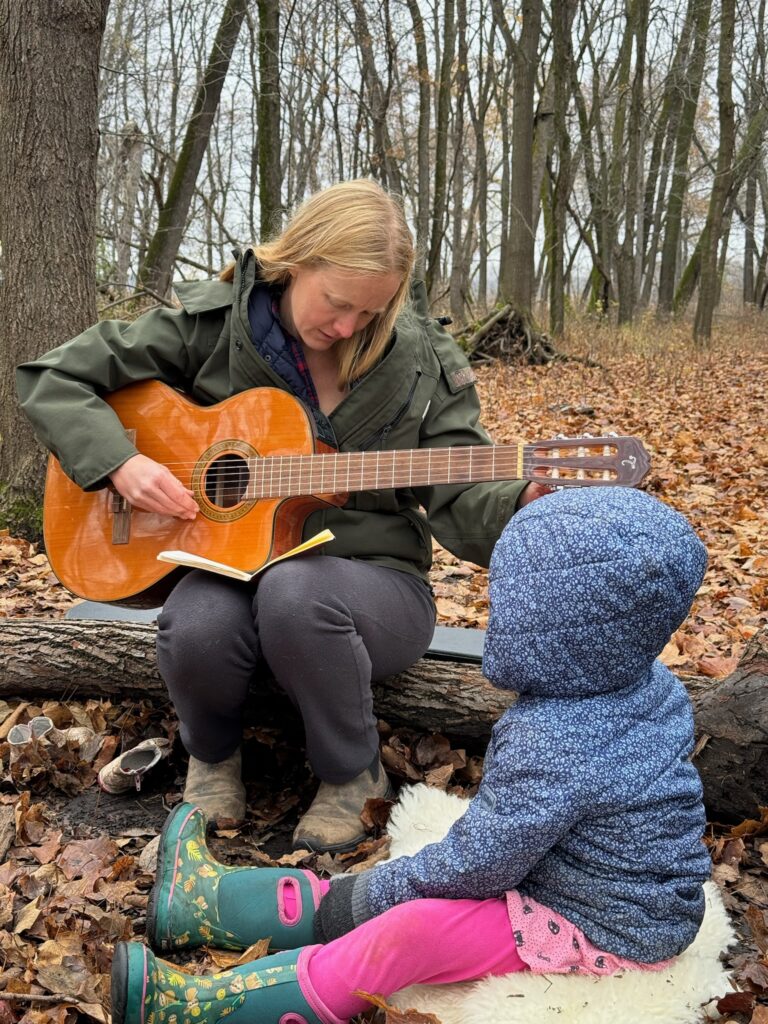
A typical Owl Explorers day includes long stretches of exploration, collaborative projects, shared meals or snacks, spontaneous games, quiet observation, and time to reflect together.
Tracking might lead into shelter building. A foraging walk might become a cooking project. A game might turn into a lesson in awareness, cooperation, or leadership.
This rhythm mirrors how children evolved to learn: through movement, observation, repetition, and social connection, supported by adults who are present rather than directive.
Families are often drawn to Owl Explorers because it offers:
Longer, uninterrupted time outdoors
Fewer transitions and a calmer pace
Support for focus, emotional regulation, and resilience
Deeper immersion in skills and place
Strong mentor modeling and peer relationships
Learning that feels embodied, meaningful, and joyful
For many children, this environment supports not only learning, but overall well-being.
Owl Explorers is not about accelerating childhood or pushing children toward adulthood. It is about creating the conditions in which healthy development naturally unfolds.
Our intention is to support children in becoming capable, confident, and connected—grounded in their bodies, rooted in the land, and shaped by strong, caring relationships.
If you’re wondering whether Owl Explorers is a good fit for your child, we’re always happy to talk and explore that together.
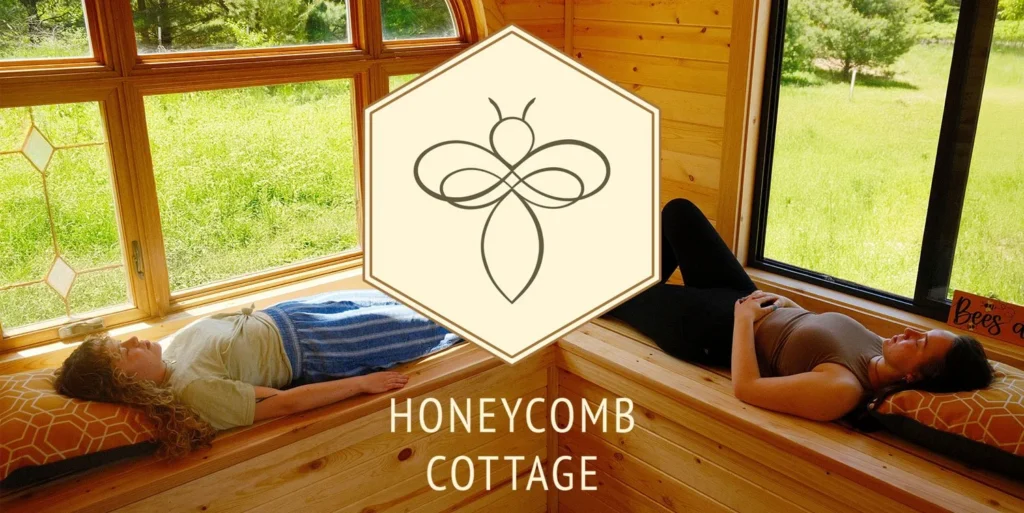
Honeycomb Homestead is a private five acre campus in Stillwater, bordering two lakes and woven into a larger ecological corridor of prairie, wetland, and woodland.
This land was not acquired to be subdivided or rushed into development.
It was planted.
More than 2,000 native trees, shrubs, and perennials have gone into the ground. Pollinator habitat has been restored. Invasive species are being carefully and steadily removed. What began as a bee aroma and frequency healing center has matured into a living homestead devoted to reverence, restoration, and relationship with the more than human world.
When school is not in session, the homestead continues to host foraging classes, animal tracking immersions, and bee based healing offerings. The thread remains the same. Ecological renewal and human renewal woven together.
Now, children are becoming part of that story.
The children will not simply attend here. They will help shape it.
They will build primitive shelter and bushcraft basecamp structures with their own hands. They will form garden beds and tend them through the seasons. They will weave willow fences and natural boundaries. They will partner with pollinators by planting native species and stewarding habitat. They will learn to identify and thoughtfully remove invasive plants while strengthening the resilience of native ecosystems.
This will not be conceptual environmental education.
It will be deep nature connection.
Together, we will track the animals that move through this place. We will follow deer trails that have us crouching beneath sumac in summer and stepping lightly across frozen waters in winter. We will learn the language of the birds. We will sit in stillness long enough to be seen as part of the landscape. We will forage its abundance with reverence. We will practice awareness not as a technique, but as a way of belonging.
We will not treat the land as curriculum.
We will treat it as community.
Children will grow up knowing how to move with animals rather than against them. They will read snow, mud, wind, and silence. They will experience the rhythm of expansion and contraction, wandering and returning, breath in and breath out, as a living pattern in the woods.
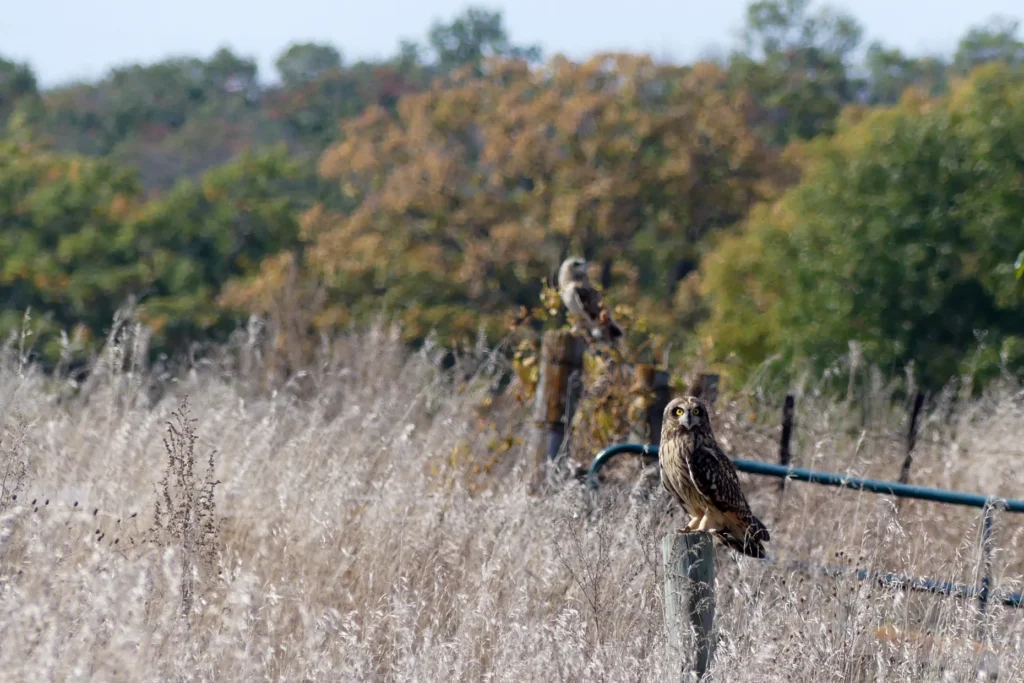
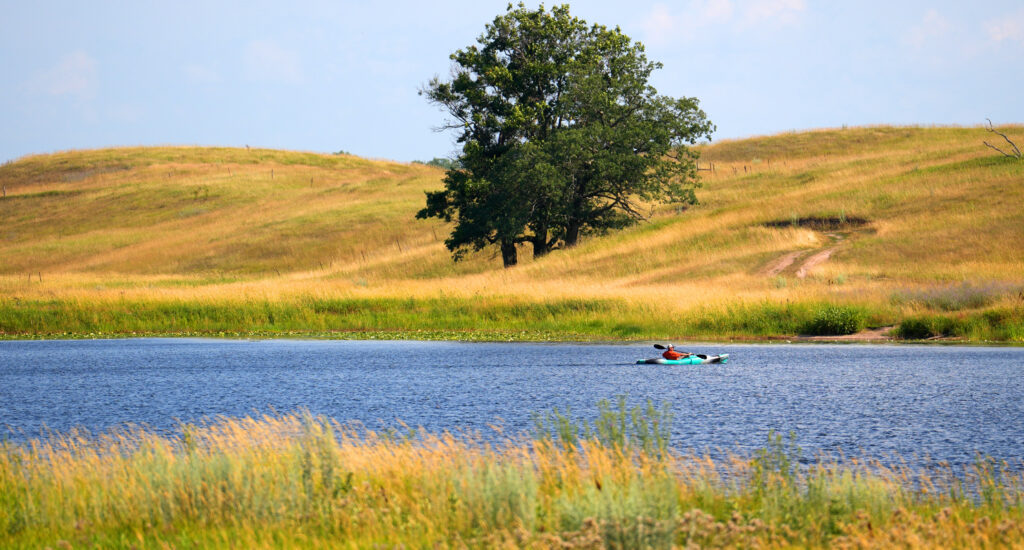
Just beyond Honeycomb Homestead lies Keystone Woods Wildlife Management Area, roughly 1,800 acres of prairie, wetlands, oak savanna, woodland, and small lakes.
For decades it operated as a private cattle ranch and hunting property. When it came up for sale, it became one of the largest remaining undeveloped tracts in the metropolitan region. Its acquisition was the largest use of Outdoor Heritage Fund dollars in Minnesota history, and is widely regarded as one of the most significant conservation wins the state has seen in recent years.
But the meaning of that protection is more than acreage.
Keystone Woods strengthens the Carnelian Creek corridor and safeguards habitat in a region where development pressure is constant. It stands as proof that land can still be protected at scale, that corridors can still be honored, that future generations can inherit something intact.
Honeycomb Homestead lives in relationship with that larger gesture.
Thousands of acres were preserved for wildlife and future generations. Five acres are being tended in intimacy, shaped by children’s hands, rooted in story, awareness, and belonging.
In the language of deep nature connection, this is about remembering that we are not separate from the living world. In the spirit of the more beautiful world our hearts know is possible, it is about growing up inside relationship rather than extraction.
One great landscape protected.
One small homestead forming.
Children moving between them.
That is how the story gets better.
$1,595/ 2 days per week OR $850/ 1 day per week ($145/week + $125 supply/registration fee)
Let us know if this is something you would like to be included in next year!
$1,595/ 2 days per week OR $850/ 1 day per week ($145/week + $125 supply/registration fee)
All three programs serve similar age ranges and are rooted in the same guiding philosophy: deep nature connection, skilled mentorship, and meaningful time outdoors. The primary difference between them is how learning is structured, not what children are learning.
Fox Walkers/Coyote Ninjas are designed around a class-based structure. Children move through a variety of distinct classes or sessions during the day, each with a clear focus such as tracking, survival skills, games, art, or nature connection activities. This model works very well for children who enjoy variety, clear transitions, and defined learning blocks.
Owl Explorers offers a more immersive, free-flow structure. Instead of rotating through scheduled classes, children spend longer, uninterrupted periods on the land. Skills, play, projects, and exploration are woven together organically as the day unfolds.
Both programs include many of the same core experiences. The difference is that Fox Walkers/Coyote Ninjas offers those experiences through structured variety, while Owl Explorers offers them through extended immersion and continuity.
Some of our guides are licensed educators, while others bring rich experience from fields such as wilderness education, permaculture, early childhood development, music, and the arts.
We don’t believe that credentials alone define quality. In fact, the path of trusting in certifications without looking deeper is one we intentionally move beyond. We are building something much more meaningful—a dream team of guides who are pure of heart, exceptional communicators, and gifted space-holders for children.
Our philosophy honors village expertise, recognizing that wisdom is cultivated through lived experience, mentorship, and time in nature. We pride ourselves on finding and nurturing the best of the best—people whose presence, curiosity, and compassion make them extraordinary mentors for your children.
We’re always excited to meet inspired humans and village experts who feel called to guide children in nature. If you have a gift to share—whether it’s in the realms of wilderness skills, art, storytelling, gardening, music, or heart-centered teaching—we’d love to connect.
To begin the conversation, please reach out to us at info@forestlakenatureschool.com. Tell us a little about your background, your passions, and what draws you to this work.
We are curating a dream team of guides—people who are pure of heart, exceptional communicators, and ready to help create the kind of school the world most needs right now.
Yes! Our Forest School program continues through the summer months, allowing children to stay connected to nature and community all year long if they wish.
Summer brings its own rhythm of wonder—mud play, water exploration, blooming meadows, and long, golden mornings outdoors. We adjust our flow to match the season, offering plenty of time for free play, discovery, and sensory-rich connection with the land.
Each season holds its own kind of magic, and we love being together to experience it all.
Our Forest School and Chickadee Explorers program welcomes children beginning at age 3. In our experience, many children feel most ready around age 4, but readiness truly looks different for every child.
We honor each child’s unique timing and capacity for independence, communication, and comfort in nature.
One of the beautiful things about our community is the intergenerational mentorship that naturally unfolds—older children modeling and nurturing the younger ones. As this continues to grow, we’re feeling into raising our upper age limit each year to allow these relationships and rhythms to deepen organically.
Yes. Our classes are intentionally mixed-age, reflecting the way real communities and ecosystems thrive—with a diversity of ages learning side by side. Older children naturally take on mentoring roles, while younger ones grow through observation, imitation, and belonging.
Our guides thoughtfully adapt each class to meet the needs, interests, and abilities of all participants, creating an environment that feels both inclusive and appropriately challenging for every child.
Yes. At Forest Lake Nature School, the health of our community depends on everyone’s care and consideration. Because our days are spent in close connection with one another and the natural world, we ask that families use both discernment and kindness when deciding if their child is well enough to attend.
If your child is feeling unwell, the best place for them is home so they can rest and recover fully. Please keep your child home if they:
Have had a fever of 100°F or higher within the past 24 hours (without fever-reducing medicine).
Have vomited more than once in the past 24 hours.
Have diarrhea or loose stools that make normal activities difficult.
Have a rash of unknown cause—please check with your family doctor before returning.
Are experiencing fatigue, coughing, pain, or congestion that would prevent them from engaging comfortably outdoors.
If your child has a lingering cough or other mild symptoms, please consider keeping them home for a day of rest or having them wear a mask out of respect for others.
Our intention is never to be rigid, but to care for the whole community with awareness and love. Thank you for helping us keep our learning village healthy and thriving.
We spend our days outdoors in all kinds of weather, so clothing that keeps your child warm, dry, and free to explore makes all the difference. As we like to say, there’s no such thing as bad weather—only insufficient gear!
Families will receive a detailed seasonal clothing guide with specific recommendations to help your child stay cozy, dry, warm, and ready to play and explore in all weather conditions.
No lunch is not needed for our Forest School or Chickadee Explorers program since it ends at Noon.
Snack time is a peaceful pause in our morning, and we’ve found that snack time is a wonderful opportunity to support independence and confidence. For this reason, snacks that are out of individual wrappers and packed in a bento-style container or stainless steel lunchbox (such as a PlanetBox) work best for children.
Please also send your child with a filled water bottle and a small- to medium-sized backpack that fits them comfortably.
For our Forest School and Chickadee Explorers program, children should come prepared for a joyful morning outdoors in all kinds of weather. Please send the following in a comfortable fitting child sized backpack:
A hearty snack packed in a small, labeled container.
A labeled water bottle (please send water only).
The appropriate clothing and gear for the weather that day—rain gear, snow gear, sun hats, mittens, or extra layers depending on the season.
We encourage families to open packaged snacks ahead of time and store them in a stainless steel container or silicone bag. This not only supports environmental values but also helps children build resiliency and independence as they manage their own food and belongings.
We spend our mornings outdoors exploring, creating, and playing, so comfort and readiness are key. Please label all items clearly and keep gear simple enough for your child to manage on their own.
At Forest Lake Nature School, every child is seen as a whole and capable being. We honor the unique rhythms, learning styles, and sensitivities that each child brings to our community.
While we are not a therapeutic or special education program, we deeply value inclusion and do our best to create an environment where children of varied abilities can thrive. Because our model is nature-based and relational rather than clinical, there are some accommodations we may not be equipped to provide.
We invite families to share openly about their child’s needs so we can explore together whether our setting is a good fit. In many cases, we find creative ways to support children through smaller group sizes, a slower pace, sensory-rich experiences, and compassionate mentorship.
If you’d like to begin that conversation, please reach out to the director to schedule a time to connect.
Both Forest School and Chickadee Explorers are for children ages 3–6, but they differ in structure, schedule, and location.
• Forest School is our school-year program, running from September through June on Tuesday/Thursdays. It offers a consistent, year-long rhythm and is held at our Lino Lakes location.
• Chickadee Explorers is a session-based program for the same age group. Chickadee Explorers meets in two 10-week sessions—a Fall Session and a Spring Session on Monday/Wednesdays—and is hosted at our location partner, Honeycomb Cottage in Stillwater.
Both programs are rooted in play, sensory exploration, story, and connection, allowing families to choose the format and schedule that best fits their needs.
Attendance is fully up to the discretion of what is the best fit for their family. Letting us know when your child will not be in attendance is requested.
1. Relational Trust and Clear Communication
We prioritize strong relationships with families, so if anything happens, you hear from us directly and promptly. Parents are immediately contacted if there is any injury or incident requiring attention beyond basic first aid.
2. Trained and Certified Staff
All guides are certified in First Aid and CPR, and some hold advanced certifications such as Wilderness First Responder. Each guide is familiar with our emergency action plan and practices scenario-based drills throughout the year.
3. Emergency Protocols and Equipment
We keep complete emergency contact information, first aid kits, and shelter plans on site at all times. Staff carry communication devices (cell phones or radios) to reach emergency services quickly if needed. In the event of severe weather, we move to designated indoor or sheltered spaces (such as the pole barn, garage, or nearby building) according to our safety plan.
We understand that life happens—schedules shift, and circumstances change. At the same time, we rely on each family’s financial commitment to sustain our guides’ income, land partnerships, insurance, and the many preparations that make our programs possible.
Our registration and supply fee is non-refundable and is collected at the time of registration. Because our class sizes are intentionally small, each spot is valuable. Please consider your family’s rhythm and level of commitment before reserving a space.
If you need to withdraw, tuition (minus processing fees) can be refunded up to 30 days before the first day of class. After that point, tuition is non-refundable.
We appreciate your understanding and partnership in keeping our school community sustainable and thriving.
Forest Lake Nature School is designed as a drop-off program so that children can fully settle into the rhythms of their group and build confidence and connection with their guides and peers.
We understand that separation can be a meaningful transition for both children and parents, and we support that process with warmth and care. Once the group has established its rhythm, we occasionally invite parents to volunteer, share a skill, or join special community days, but this is coordinated in advance with the instructor.
Our intention is to create a safe and loving space where children can develop independence while still feeling deeply supported by the larger village around them.
Yes. Our lead guides and anchor teachers are trained to recognize the signs of anaphylaxis and to administer epinephrine (EpiPens) when needed. Safety and preparedness are essential parts of our training and daily rhythm.
Because our program takes place outdoors and children may be spread across different learning areas, there may be moments when a guide is not immediately within eyesight—such as accompanying another child to the restroom or gathering supplies. For that reason, we ask that children who have prescribed medication carry it with them at all times, and that parents review its use with our staff before the program begins.
Our goal is to ensure that every child is supported, safe, and known by the adults around them.
Masks are not required at Forest Lake Nature School. Because our programs take place primarily outdoors in the fresh air, families are free to decide what feels best for them.
We respect each family’s choice and trust our community to make thoughtful decisions that support everyone’s comfort and well-being. Children and adults are always welcome to wear a mask if they prefer.
If your child is experiencing persistent coughing or cold symptoms, it may be best for them to stay home or wear a mask out of respect for others until they are feeling better.
No, Forest Lake Nature School is not affiliated with any specific church or religious organization. We welcome families from all walks of life and honor the diverse spiritual and cultural backgrounds that make our community rich and vibrant.
At the heart of our work is a shared reverence for the natural world and a belief that life is sacred, interconnected, and full of mystery and beauty. We recognize that many traditions—Christian, Jewish, Muslim, Hindu, Buddhist, Baháʼí, Indigenous, and others—speak to this same sense of wonder and gratitude for creation.
Our goal is not to teach doctrine, but to nurture in children a deep awe for the living world, a sense of belonging, and respect for the many ways people understand and celebrate the sacred.
Please list any food allergies or sensitivities on your registration form.
During snack time, children eat outdoors or in open-air shelters, and we maintain a no food-sharing policy to support everyone’s safety. If your child has significant allergies or requires additional precautions, please reach out so we can make a thoughtful plan together.
Forest Lake Nature School follows a common-sense, nature-based approach to health and safety. Because our programs take place primarily outdoors with abundant fresh air, natural spacing, and sunlight, the risk of transmission is very low.
We trust families to use discernment and open communication. If your child is unwell or showing symptoms of any contagious illness (COVID or otherwise), we ask that you keep them home until they are well enough to return to full participation in outdoor play and learning.
We do not require masks or testing, but we do encourage transparent conversations and respect for each family’s comfort level. If there is a confirmed case within our community, we notify affected families promptly so they can make informed decisions.
Our focus is always on supporting the whole child and community well-being—physically, emotionally, and relationally—so that children feel safe, connected, and cared for.
Yes, we have bathrooms available onsite for children and guides to use throughout the day.
We believe that meaningful growth happens in all kinds of weather, and we help children learn how to stay comfortable, resilient, and joyful outdoors year-round. Our guides are skilled at adapting plans to meet the day’s conditions, and we have sheltered spaces available when extra protection is needed.
That said, if weather ever becomes unsafe—such as severe storms, lightning, or extreme cold—we will cancel or adjust class and notify families as soon as possible.
Owl Explorers Guides
Testimonials
Melissa and Anthony are kind, gentle, loving souls with a fabulous focus on the beauty around and within. We met through the music classes I teach and they were focused on the rhythm of their children’s learning styles. Anthony brings an unmatched energy and Melissa brings a peaceful gratitude for all around her. They are right on track with healthy sustainable lifestyles for body, mind and spirit. Your family will be enriched by this family whether you have a moment with them or a blink of the preschool years or a lifetime of friendship. Highly recommend! With their thoughtfulness and dedication, their school will be of unmatched quality and bring joy to all who enter their life garden.
- Tibbe
I would very much love for my children to be a part of Forest Lake Nature School. If I could roll the clock back in time and make it all happen somehow, cosmically, if they were small people, I think they would be nurtured well and certainly enjoy a couple days a week with you all. Which is the best compliment I can really give, because I am pretty particular about what I want my children to be a part of.
- Greg
- Aaron
- Bethany
- Bridget
My daughter and I are really enjoying the parent-child group through Forest Lake Nature School. Melissa and Anthony are so warm and welcoming and we’ve made so many friendships and found such a great community through our participation in their program. We love the community building, togetherness, learning, programming and atmosphere. Their group is always our favorite activity of the week because we get to play outside together while being apart of something that is really helping shape the next generation into loving, kind, responsible, aware and well rounded people who care about living a holistic lifestyle in balance with nature and who will be passionate about stewardship of the land. We love Forest Lake Nature School and look forward to our ongoing participation as part of this beautiful family they have created.
- Sarah
- Kyra





Join Our Newsletter
Sign up to receive our monthly newsletter! Learn about new programs, open enrollment, and other happenings.
Begin Enrollment
Secure your child’s place in our upcoming programs today.